


I will be interviewing the following two wonderful people:
Nikki Erickson (born 1972)
Linda Bayner (born 1951)
Pre-interview questions:
What were three historical events from your life that you most vividly remember?
Nikkie: The Challenger explosion, MTV’s debut, and Reagan getting shot.
Linda: JFK’s assassination, Dr. Martin Luther King’s assassination, the social movement of the 60’s.
How did growing up during/raising a child during the Cold War affect you?
Nikki: Growing up during, I remember doing nuclear drills in school which was pointless. I don’t think I feared nuclear war, I guess I always figured they’d work it out. Maybe that’s naivety, but it didn’t take over me.
Linda: I grew up with fear of everything but as I got older, I didn’t live in fear of it.
Do you think your own identities shaped your perception of historical events?
Nikki: Yes. I think who we are and the environment we grow up in shapes our views. Each person’s experience is different based on where they were born, families, hardships, etc.
Linda: Yes.
What are you most proud of from your life?
Nikki: Getting a college degree when only one other person in my large family did so.
Linda: Raising a child that went to college.
If you could change how any historical event played out, what would it be and why?
Nikki: Packers would have 15 Superbowl’s, just kidding. The Trump presidencies would have never happened.
Linda: Ditto.
How different do you think your lives would be if you didn’t take a leap of faith and move from Wisconsin to Arizona?
Nikki: I would’ve been better able to maintain high school friendships, but I probably still would have become a physical therapist.
Linda: I would’ve been stuck in a rut. I wouldn’t have learned or been exposed to the things I’ve done here (natural healing stuff etc.)
Thoughts on what I plan to research for the actual interview:
I talked to my mom and grandma recently, and I asked them each if there was a historical event that they remember most vividly or one that impacted their lives the most. They gave me three major historical events they remember vividly during the pre-interview, but I was unsure if those events directly impacted their views or lives. Both of them said that they would think about it because it was a difficult question to answer on the spot. Because of this, my research topic will be subject to change. However, I am currently thinking I will research the Challenger explosion and the Space Race era overall. My mom has told me about how horrified she was to see the explosion in real time, but I really don’t know much about how my grandma reacted. I would also love to hear what my grandma thought about the bitter rivalry between the USSR and the U.S during the height of the Space Race era, because she was around to see all of that. From a research perspective, I think it would also be really interesting to explore the “shady business” of the Space Race era, particularly the Challenger explosion. NASA administration was aware that the Challenger was in danger of explosion but decided to go forward with the mission anyway for publicity. I think it would be really interesting to delve deeper into that, and the other questionable choices made during the Space Race era as well. Additionally, I would love to get both my mom and grandma’s opinions on past and current space exploration as a whole. I think there are numerous angles I can come at this from, and I’m excited to explore my options.
Interview with two generations preparation
For this interview project, I will be focusing on the Space Race era spanning from the launch of Sputnik in 1957 to the official collapse of the Soviet Union in 1991. My grandma, born in 1951, will likely have some really good insights into the initial rivalry between the United States and the USSR. She has witnessed monumental advances in human space exploration, such as Apollo 11 in 1969. I think my mom, born in 1972, will have some really good insights into the advancing technology and the new goals the superpowers had for space exploration- such as sending women into space. My hope with this project is to gain insight as to how civilians viewed the seemingly incomprehensible exploration of space. I also hope to understand how space exploration affected everyday life for humanity.
Elder One: Linda Bayner, born 1951 in Sparta, Wisconsin. I hope to discuss the earlier days of the Space Race, including the Sputnik satellite launch and Apollo 11. My initial questions are the following:
What do you remember about the Sputnik launch?
What do you remember about Apollo 11?
What was the media saying about Sputnik? Apollo 11? How was American media portraying the Soviets?
Did you notice any significant shifts in pop culture, society, or media as a result of space exploration?
What were your thoughts on the Space Race era? Space exploration in general?
How did the Space Race and Cold War affect you personally?
Through my research, I found some really interesting primary sources. Below is a video from the Library of Congress. It is an ad regarding the Sputnik launch.
JFK's outline of the Space Program
This is a document written by John F. Kennedy from 1961. He emphasizes that the space program is crucial for national interests and the best way to defeat the tyranny the Soviets have created around the world. This shows a national shift in attention and resources to space exploration during the height of the Cold War.
Khrushchev and Dutt Conversation
This is a recorded conversation between Nikita Khrushchev and Indian Ambassador S. Dutt. In this conversation, Khrushchev details Soviet superiority in space exploration and missiles while declaring the U.S. is unwilling to agree to any terms of disarmament. The U.S. claims the same about the USSR. This shows that both sides blamed the other for the state of the world rather than tried to find a common ground.
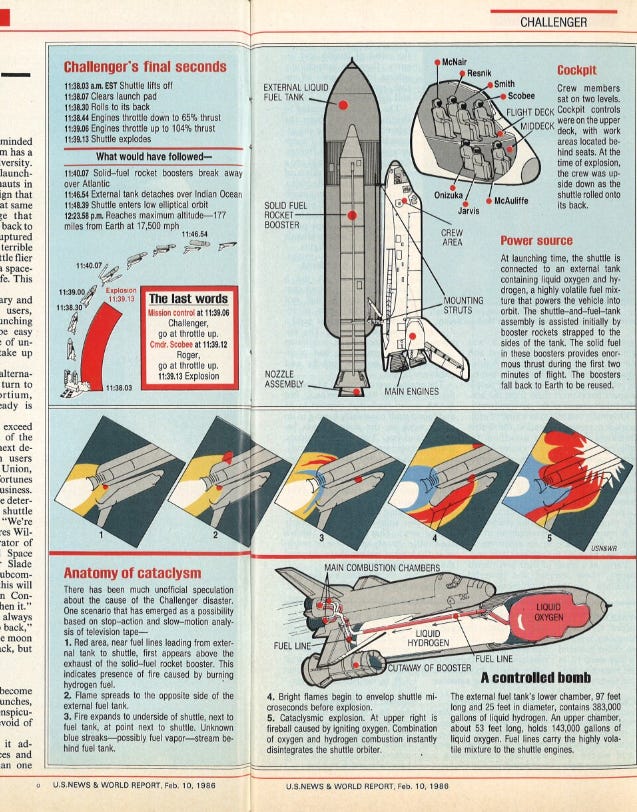
Elder Two: Nikki Erickson, born 1972 in Onalaska, Wisconsin. I hope to discuss the age of space exploration during the 1980’s and how it shaped different parts of society. I also hope to talk about the Challenger explosion in 1986 and the questionable decisions leading up to the tragedy.
My initial questions are the following:
What do you remember about the Challenger explosion? Did you ever hear about the questionable choices NASA made before the launch?
Was space exploration a large part of the media and everyday life?
Do you think the U.S. focused too much time, money, and resources on space exploration during this period of the Cold War? What were your thoughts on the Cold War in general?
To what extent do you think pop culture was influenced by space exploration?
Do you think space exploration impacted education? I.e., did you notice any profound shifts in attention to science and math in school?
What are your thoughts about space exploration in general?
This link is a transcript of the Challenger tragedy. Released by NASA itself, the transcript details the final words of the crew before devastation. The final words received by mission control were “uh-oh”.
The following is an archival image of a magazine that U.S. News published detailing the Challenger explosion. This article does not yet confirm that NASA was aware of the dangers Challenger was facing.
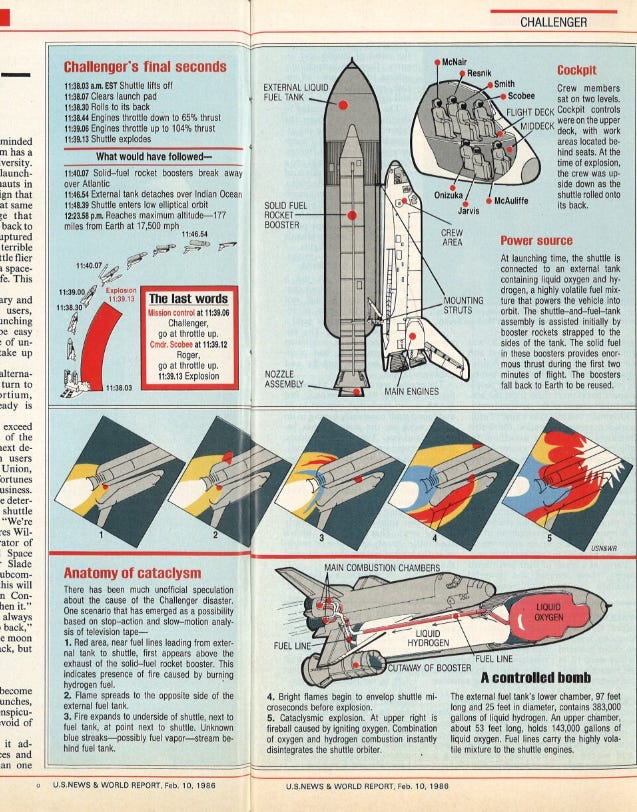
From U.S. News, February 10th, 1986 This is a news clip from 1988 that details Reagan’s “Star Wars” strategic defense initiative. It also shows how space exploration continually shaped the relations between the U.S. and the USSR.
Timeline of relevant events:
1957: Sputnik becomes the first human made object and satellite to orbit the planet.
1961: Cosmonaut Yuri Gagarin becomes the first person in space, orbiting the Earth in Vostok 1.
1961: Astronaut Alan Shepard becomes the second person in space.
1963: Valentina Tereshkova becomes the first woman in space.
1969: The United States puts astronauts on the moon with the Apollo 11 mission.
1983: Sally Ride becomes the first American woman in space.
1986: The Challenger tragedy occurs.
1991: The official collapse of the Soviet Union.
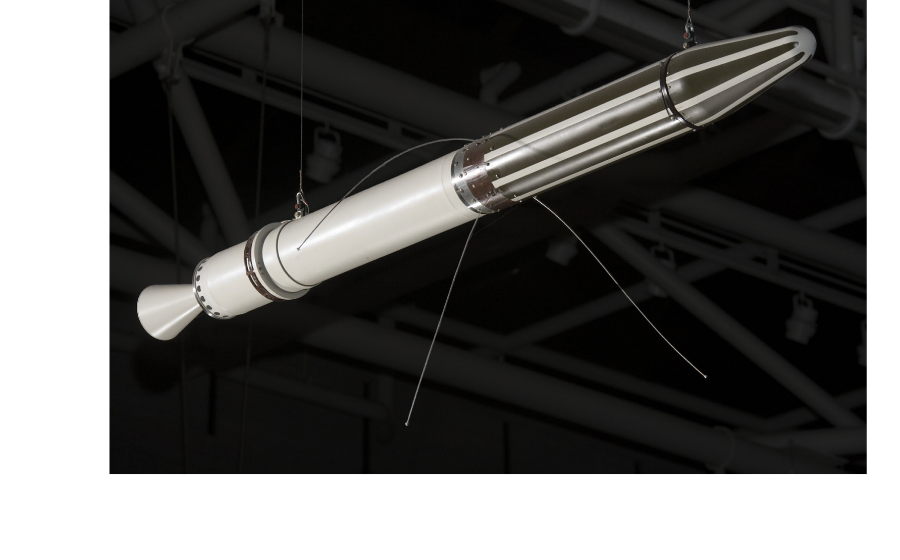
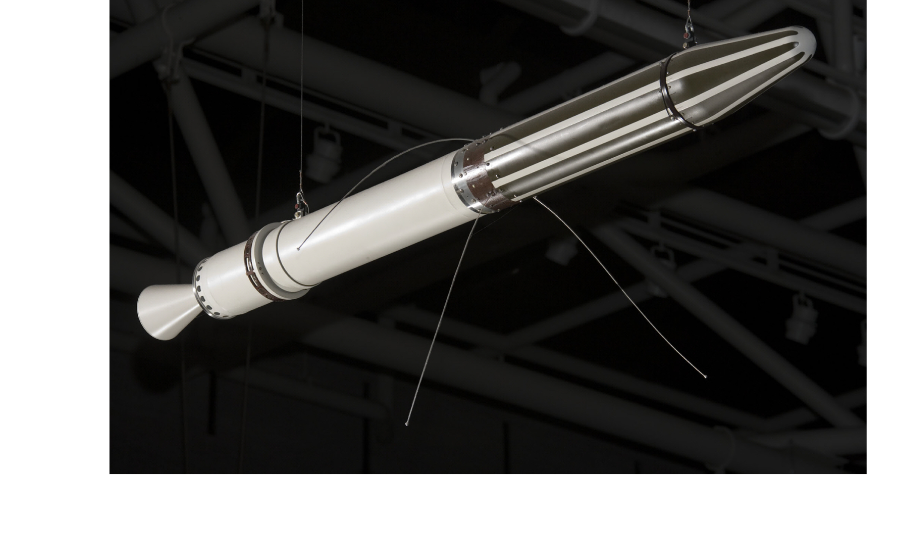
Explorer I, the first American Satellite in Space. “Satellite, Explorer I,” Digital Public Library of America, https://dp.la/item/ec9defa3f41f7682c5b61254c8a0a442. 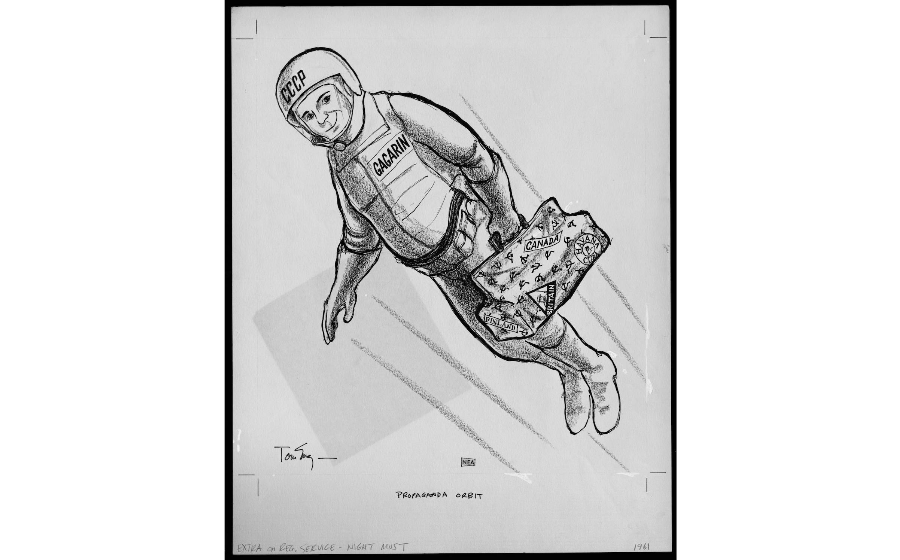
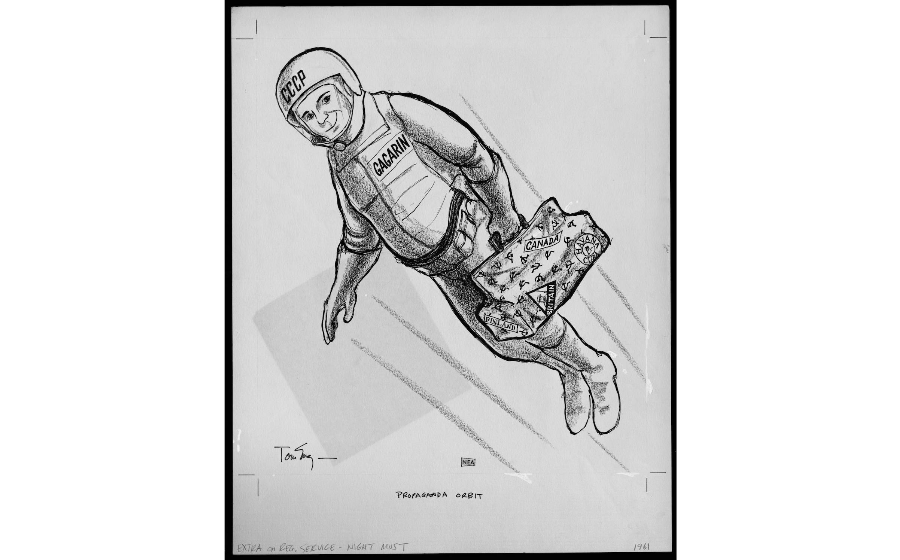
An American Political cartoon of Yuri Gagarin after he became the first human in space. Engelhardt, Tom, “Propoganda Orbit,” Digital Public Library of America, https://dp.la/item/5c4ae41508c0cdbde2d08ee9cba5114e. 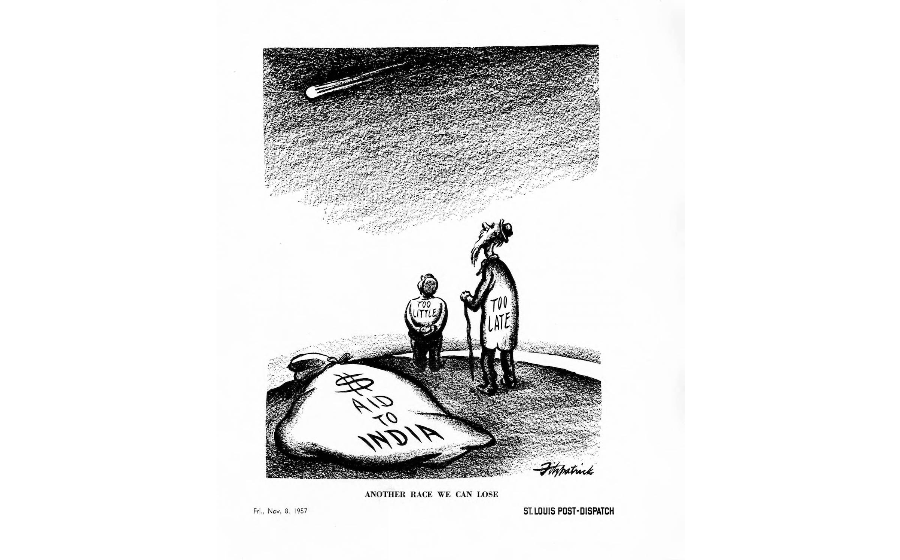
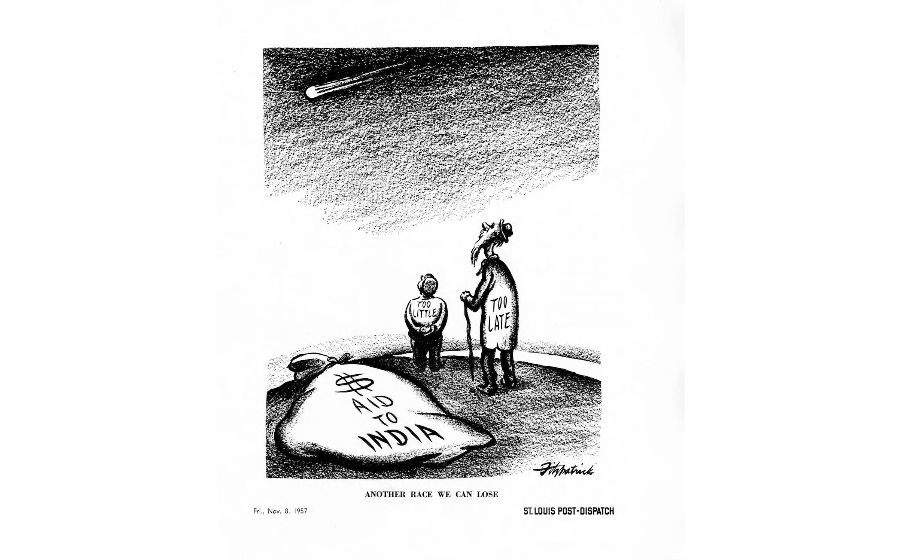
A political cartoon describing Americans’ despair over Soviet superiority in space. 1957. Fitzpatrick, Daniel Robert, “Another Race We Can Lose,” Digital Public Library of America, https://dp.la/item/6d0e3820e335f075016c4bc9e44d6b9a. 4. The research I have conducted has brought a lot of new insight into just how influential the Space Race era and space exploration has been. It quite literally shaped international relations, use of resources, national interests, and more. I look forward to interviewing my mom and grandma using my initial questions above. I feel like I am going to get a lot of good perspective into how these monumental achievements for humanity affected every day people.
Personal questions:
Name three historical events from your life.
-COVID-19: Like everyone else, the pandemic had numerous impacts on my life. It is arguably one of the most significant things to happen in my lifetime thus far because of its sheer global impact.
-AI: Artificial Intelligence has become accessible to all people within the past few years. The creation of AI, in my opinion, has had drastic impacts on our educational, social, and economic worlds. I think artificial intelligence used to just be a Terminator reference, but the advancements made to it during our lifetime has brought it everywhere.
-Obergefell v Hodges (2015): I am sad that it took until my lifetime for same-sex marriage to become legal in all states in the U.S., but I am proud to live at the same time as the individuals and groups who continually fought for this right every consenting adult deserves to have.
-
Name three events that happened in your town or school or other community you have belonged to
-Multiple of my classmates tragically passed away, more often than not due to violence.
-My town began to experience an increase in economic growth after an electric vehicle company built their factory there.
-The marching band I was in won state championships for the first time ever during my senior year.
Name three personal events.
-Meeting my wonderful partner showed me love is beautiful but takes time and effort.
-Going to my first peaceful rally/protest showed me we all have individual and collective power and compassion.
-Coming to college showed me that it’s ok to not have everything figured out while I build a future for myself.
Hello! I love the images and videos you added to your research part. Having the political commentary in the comic images created to having the video playing about what the space race does really adds to the information you are portraying. I know for me having visuals are really helpful since it makes it so I am able to make connections with the topic better. I also never thought about the space race as a possible topic, so it is a fascinating thing you picked to interview on.
I love your idea of focusing on the Space Race!!! This reminds me of a pseudohistorical TV show about that that is really fun: For All Mankind. It uses real footage, but changes who lands on the moon first. Back to the interviews, you have interesting info to develop and some good questions. With some research you could bring information to the interviews that prod people's memories. It could be really fun. There are also broader cultural effects in houses, cars, fashion that were influenced by the space race. With your youngest elder born in 1972, you will probably get good stuff! I am excited to learn more.